Did you know that the average person loses up to 100 strands daily? Yet, bad grooming habits can make it double. Many of us don’t realize that using the right tools can greatly reduce hair breakage.
Choosing the right Hair Brush for Personal Use is more than just styling. It’s a key step in keeping your hair healthy for the long term. We think that getting the best hair brush for your hair type can change your grooming routine.
Consistency is key for strong, vibrant hair. In this guide, we show how better tools can improve your hair care. Let’s find the perfect tool to keep your hair healthy and strong every day.
Key Takeaways
- High-quality grooming tools drastically lower the risk of mechanical breakage.
- Choosing the right instrument protects the natural elasticity of your strands.
- Daily maintenance routines rely heavily on the quality of your equipment.
- Matching a tool to your specific texture prevents unnecessary damage.
- Proper care habits lead to long-term vitality and shine.
Understanding the Importance of Choosing the Right Hair Brush
Knowing how your brush affects your hair can change your hair care results. Many see grooming as simple, but learning how to choose a hair brush is key for long-term hair health. The right brush can turn dull, tangled hair into a vibrant, healthy mane.
The Impact of Brushes on Hair Health
Brushing your hair can either stimulate your scalp or cause friction. Quality brushes spread natural oils down to the hair ends, offering hair brush benefits like shine and moisture. But, the wrong brush can damage the cuticles and irritate the scalp.
“Your hair is the crown you never take off, so treat it with the care it deserves.”
Be extra careful when your hair is wet. Wet hair is elastic and weak, making it easy to break. Using a brush with stiff bristles on wet hair can cause a lot of breakage. Instead, use wide-tooth combs or detanglers.
Different Hair Types and Brush Compatibility
Finding the right hair brush for different hair types means knowing your hair’s texture. Fine hair needs soft, flexible bristles to avoid breakage. Thick or curly hair requires sturdy, spaced bristles to manage volume without frizz.
Here are some tips for choosing the right brush:
- Fine Hair: Choose soft boar bristles or nylon blends for gentle smoothing.
- Thick Hair: Go for brushes with strong, reinforced bristles for deep penetration.
- Curly Hair: Use brushes with flexible, spaced-out pins for gentle detangling.
Matching your brush to your hair’s needs reduces mechanical stress. This simple change can prevent split ends and thinning. The right tools make grooming a healthy habit, not a damaging one.
Types of Hair Brushes for Every Need
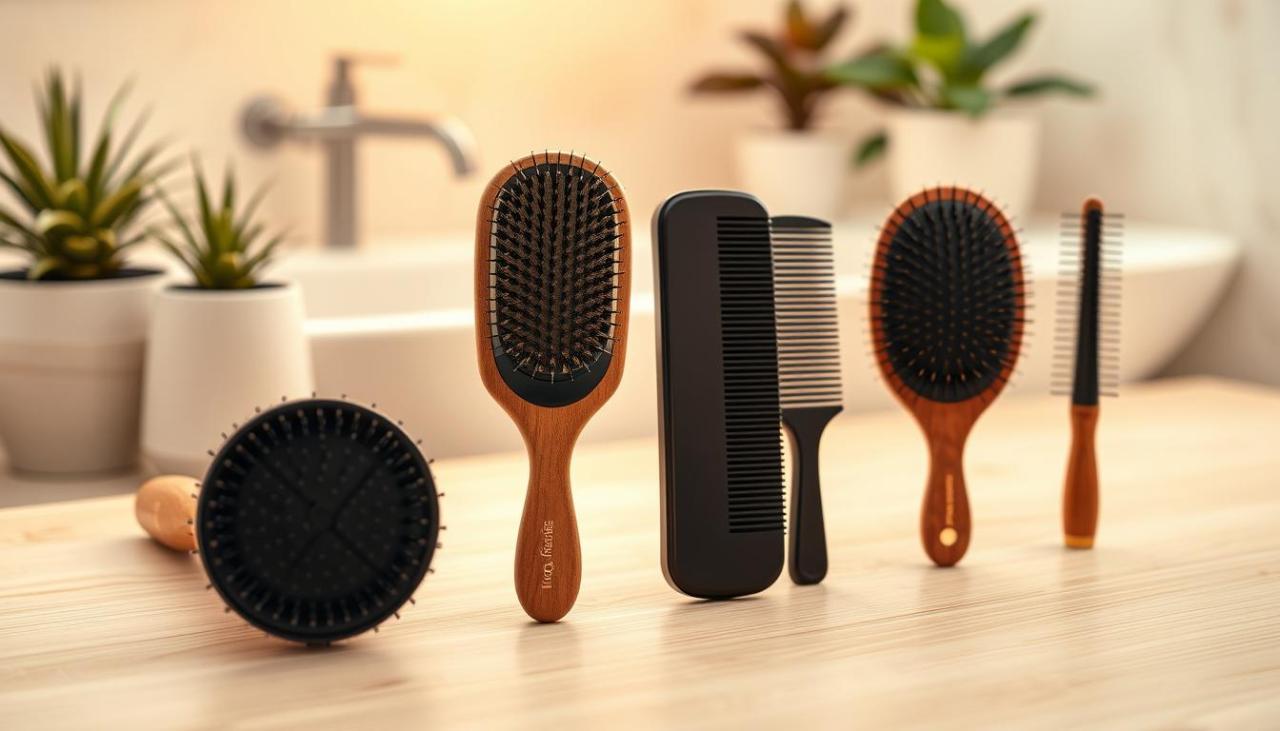
Finding the best hair brush for your needs is important. The right tool can make styling easy and enjoyable. Knowing about hair brush types helps you get salon-quality hair at home.
Paddle Brushes: Ideal for Smoothness
Paddle brushes are great for detangling thick hair and smoothing it. Their wide base covers a lot of hair, making them perfect for long or straight hair. They’re also gentle on your scalp and spread natural oils evenly.
Round Brushes: Perfect for Volume
Round brushes add body and bounce to your hair. They’re key for professional-looking blowouts that last all day. With a hairdryer, they lift hair at the root for impressive volume and shape.
“The secret to a perfect blowout is not just the product you use, but the tension you create with your round brush while drying.”
Vent Brushes: Quick Drying Solutions
Vent brushes have openings for air to flow through. They’re the best hair brush for quick hair drying. They reduce heat exposure time, keeping your hair healthy.
Choosing the right hair brush for different hair types is crucial for hair health. Here’s a quick guide to help you pick the right brush for your style.
| Brush Type | Primary Use | Best For |
|---|---|---|
| Paddle | Smoothing | Long, thick hair |
| Round | Volumizing | Blowouts and curls |
| Vent | Quick Drying | Fine or damp hair |
Knowing about hair brush types helps you choose the right one for any occasion. Whether you need a hair brush for different hair types or a special tool, knowing your options is key.
Materials Used in Hair Brushes
Knowing about hair brush materials is key to keeping your hair healthy and shiny. The type of material in your brush affects how it works with your scalp and hair. Choosing the right one can make your daily hair care better.
Natural Bristles vs. Synthetic Bristles
When you look for a new brush, you’ll find two main types: natural and synthetic. Natural brushes, made from animal hair, are soft on your hair’s cuticle. Synthetic brushes, made from nylon or polyester, are good for detangling wet or thick hair.
- Natural bristles: Great for fine or thinning hair.
- Synthetic bristles: Best for detangling thick or wet hair.
- Mixed bristles: A mix of detangling and scalp stimulation.
The Benefits of Boar Bristle Brushes
Boar bristle brushes are top picks for hair care. They spread natural scalp oils through your hair, naturally enhancing shine without extra products.
Using these brushes regularly keeps your hair healthy and smooth. They gently massage your scalp, improving blood flow and hair health.
Plastic vs. Metal: Which is Better?
Choosing between plastic and metal brushes is important. Cheap plastic brushes can damage your hair with sharp edges. Metal brushes can also cause unwanted heat damage when used with heat styling tools.
| Material | Best Use | Risk Factor |
|---|---|---|
| Plastic | Detangling | Static buildup |
| Metal | Styling | Heat damage |
| Boar | Smoothing | None |
Avoid cheap, low-quality brushes with rough edges. Investing in quality hair brush materials keeps your hair strong and healthy.
Key Features to Look for in a Hair Brush
When you learn how to choose a hair brush, you see that design is as important as materials. The way a brush is made affects your styling and hair health.
Handle Comfort and Grip
A good brush should feel right in your hand. Look for handles with ergonomic designs or grips that don’t slip. These help you style with precision and prevent hand strain.
Brush Size and Shape Considerations
The size and shape of your brush matter for your hair type and style goals. Big, wide brushes are great for smoothing long hair. Smaller, round brushes are better for curls or adding volume.
- Large paddle brushes: Best for detangling and smoothing large surface areas.
- Small round brushes: Ideal for adding lift at the roots or creating waves.
- Oval shapes: Versatile for general maintenance and daily styling.
Flexibility of Bristles
When picking a hair brush, the bristle movement is key. A top-notch brush has a pneumatic cushion that lets bristles move with your scalp. This reduces hair tension and breakage.
Make sure the bristles are soft to avoid pulling or tearing your hair. A well-made brush styles well without harming your hair. By focusing on these features, you find a durable brush for your hair care needs.
Popular Hair Brush Brands in the Market
Finding the right hair care tools can be tough. But knowing the top brands makes it easier. In hair brush reviews, some names keep popping up for their quality and dependability. Choosing a well-known brand means you’re investing in your hair’s health.
Mason Pearson: A Luxury Choice
Mason Pearson is the top pick for luxury grooming. Their brushes go through an 18-stage process for unmatched durability. Many pros see it as a professional hair brush that lasts for years with care.
Tangle Teezer: Great for Detangling
Struggling with tangles and breakage? Tangle Teezer has a modern fix. Its teeth design moves through hair smoothly, without pulling. It’s an affordable hair brush that works wonders for sensitive scalps and tangled hair.
Wet Brush: Perfect for Wet Hair
Wet hair is very fragile. The Wet Brush is made to protect it. Its soft bristles gently separate strands, making it essential for post-shower brushing.
| Brand | Primary Benefit | Best For | Price Range |
|---|---|---|---|
| Mason Pearson | Longevity | Daily Grooming | Premium |
| Tangle Teezer | Detangling | Knotted Hair | Accessible |
| Wet Brush | Gentle Care | Wet Hair | Budget-Friendly |
Special Features of Some Hair Brushes
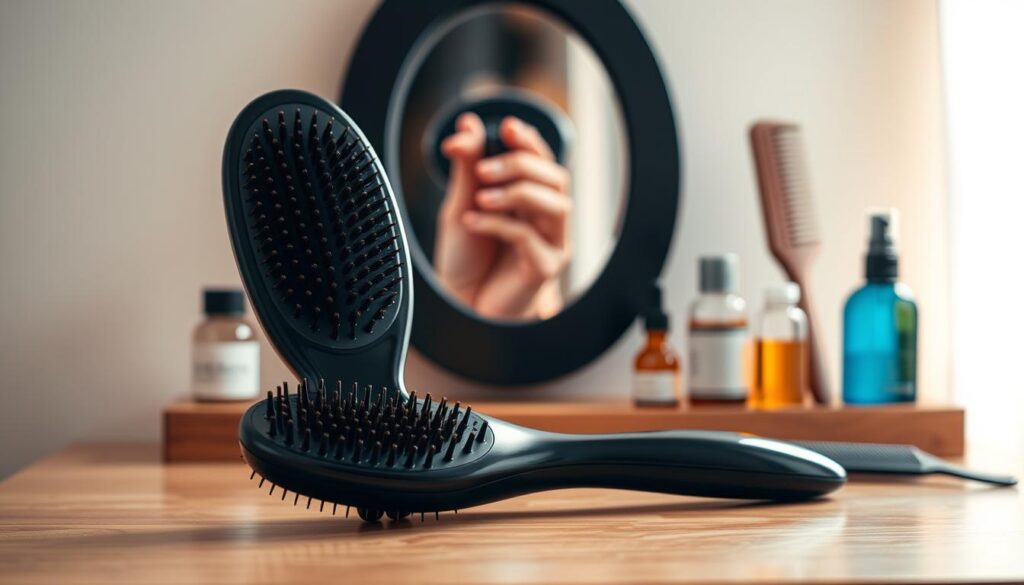
It’s not just about the bristles. The inside tech of a brush can really change how your hair looks and feels. Today’s brushes have advanced features to solve styling problems. Knowing these hair brush benefits helps you pick a tool that boosts your hair health while styling.
Ionic Technology for Frizz Control
Many top brushes now have ionic tech. This tech emits negative ions to fight static electricity. It smooths the hair cuticle, cutting down frizz and flyaways.
Using an ionic brush makes your hair sleek and shiny. It’s great for humid areas or dry hair. It turns regular grooming into a smoothing treatment that makes hair look healthy.
Heat Resistance for Styling Purposes
For blow dryer users, a professional hair brush that can handle heat is key. Regular plastic brushes can melt or warp under high heat. Heat-resistant parts keep their shape, ensuring even tension during blowouts.
These brushes often have ceramic or tourmaline coatings for even heat. This prevents damage from hot spots. A durable brush keeps your styling safe and effective every time.
| Feature | Primary Benefit | Best For |
|---|---|---|
| Ionic Bristles | Reduces static and frizz | Daily smoothing |
| Ceramic Barrel | Even heat distribution | Blow-drying |
| Heat-Resistant Nylon | Prevents melting/warping | High-heat styling |
How to Properly Care for Your Hair Brush
A clean hair brush is key to getting salon-quality hair at home. We often forget to clean our hair tools, but they need care too. Neglecting your brush can cause oils, dust, and old hair products to build up and go back onto your hair.
Cleaning Techniques for Longevity
Wash your hair brush every month to keep it in top shape. First, remove any loose hair from the bristles with a comb or your fingers. Then, mix warm water with a bit of clarifying shampoo in a bowl.
Swish the brush in the soapy water, making sure the bristles get wet. Be gentle with the rubber cushion to avoid water getting trapped. Rinse well with cool water and let it dry on a clean towel with the bristles down.
Storage Tips for Better Maintenance
Storing your brushes right is as important as cleaning them. Don’t leave them in humid places like the bathroom, as moisture can damage them. Store them in a cool, dry place away from sunlight.
Keep your brushes in a drawer or organizer to prevent damage. If you travel, use a protective case to keep the bristles in shape. These small steps help your brush last longer and stay a reliable part of your beauty routine.
| Maintenance Task | Frequency | Recommended Tool |
|---|---|---|
| Remove loose hair | After every use | Fingers or comb |
| Deep clean | Once a month | Clarifying shampoo |
| Bristle inspection | Every three months | Visual check |
| Storage check | Daily | Dry drawer or case |
When to Replace Your Hair Brush
Knowing when to replace your hair brush is key to keeping your hair healthy. These tools wear out over time, even if you take good care of your hair. Using a worn-out brush can cause split ends and breakage.
Signs It’s Time to Buy a New Brush
Check your brush often for damage. Bent or melted bristles mean it’s time for a new one. These bristles can snag your hair, causing damage.
Also, look at the pneumatic cushion. If it’s cracked or dry, it’s losing its effectiveness. A loose or wobbly handle is another sign it’s time for a new brush.
How Often Should You Replace Your Brush?
The life of your brush depends on its materials. High-quality bristles last longer, while synthetic ones may wear out faster. If you use your brush every day, replace it every six to twelve months.
Looking for a new brush? Check hair brush reviews to see how they last. You don’t have to spend a lot to get a good brush. Look for one that’s durable and easy to use.
Using Hair Brushes for Styling vs. Daily Use
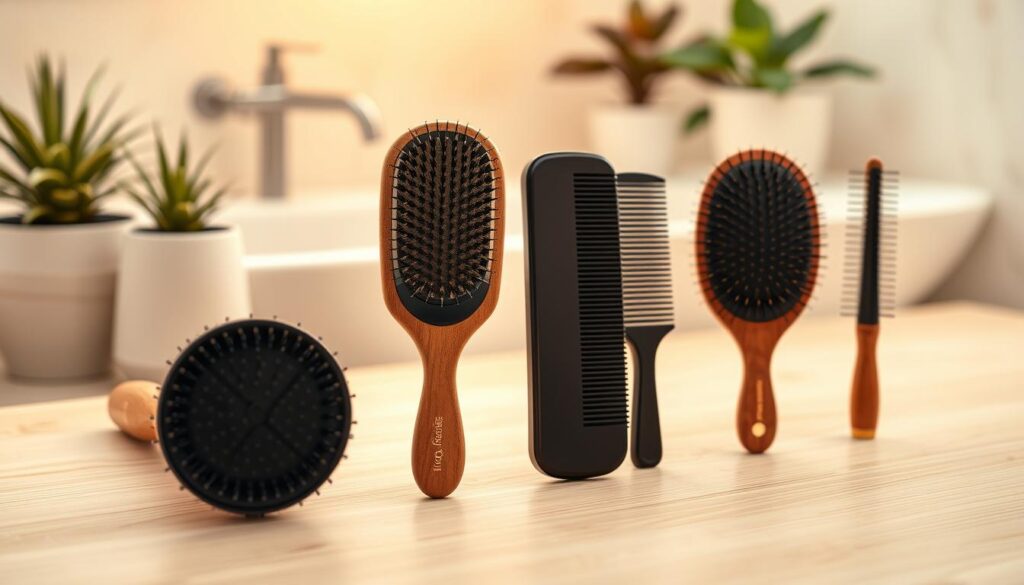
Knowing the difference between styling tools and maintenance brushes changes your hair care game. Many people use the same tool for everything, which can harm your hair. Learning about hair brush types helps protect your hair and get the look you want.
Best Brushes for Creating Styles
For adding volume or shaping your hair, you need a precise tool. Round brushes are top for blowouts because they grip and smooth your hair. They work best with heat to lift your roots and add body.
Choosing the right hair brush for different hair types is key. Smaller round brushes are great for tight curls or short hair. Larger ones make soft waves. Make sure your brush can handle heat to avoid damage.
Everyday Brushes for Maintenance
Your daily routine focuses on gentle detangling and scalp care. Paddle brushes are perfect for this because they cover more area and smooth your hair faster. Using the right tool is crucial for keeping your hair healthy and preventing damage.
Look for a brush with flexible bristles that gently work through knots. This is important for fragile or chemically treated hair. Knowing about these hair brush types makes your daily care routine gentle and safe.
| Feature | Styling Brush | Maintenance Brush |
|---|---|---|
| Primary Goal | Volume and Shape | Detangling and Smoothing |
| Best Shape | Round or Vented | Paddle or Oval |
| Heat Usage | High Compatibility | Not Recommended |
| Frequency | Occasional Styling | Daily Use |
Tips for Brushing Techniques
How we brush our hair is crucial for keeping it healthy. Even with the best hair brush reviews, your results depend on your daily habits. Using the wrong motion can stress your hair strands.
Detangling Without Damage
Detangling must be done with extreme care. Avoid pulling or tugging, as it can snap your hair. Instead, use slow, gentle strokes that move through your hair smoothly.
For an affordable hair brush that’s gentle on knots, look for ones with flexible bristles. These brushes help you work through tangles without hurting your scalp. Always keep your brush clean to avoid debris causing more friction.
Brushing Order: Start from the Bottom
Start detangling from the ends to protect your hair. Working up to the roots helps prevent small knots from becoming big ones. This professional hair brush technique is key to reducing breakage.
After smoothing the ends, move your brush up toward the scalp. This spreads natural oils, giving your hair a healthy shine. Making this simple change will improve your hair’s strength and texture over time.
DIY Hair Care with the Right Brush
Our hair brushes are more than just for detangling. They can also help with scalp health and spreading hair products evenly. By picking the right brush, you can make hair care a therapeutic experience. This supports your hair from the roots to the ends.
Natural Oils and Their Benefits
One big hair brush benefit is boosting blood flow to the scalp. Brushing your hair massages the skin, bringing nutrients to the hair follicles. This helps spread natural oils down the hair shaft, keeping it moisturized.
Using a quality brush regularly stops oils from building up at the roots. This avoids an oily look and boosts hair health. To keep these benefits, clean your hairbrush often to avoid dirt buildup.
Combining Products with Brushes for Better Results
How well you apply hair care products matters a lot. A brush helps spread leave-in conditioners or serums evenly. This prevents heavy buildup in one spot. The type of hair brush material used is key, as some work better with wet hair than others.
For dry hair, the right hair brush can greatly improve moisturizing treatments. Synthetic bristles are good for wet hair, while natural fibers are better for smoothing and polishing. Here’s a comparison to help you pick the best brush:
| Material Type | Best Use Case | Key Advantage |
|---|---|---|
| Boar Bristle | Oil Distribution | Natural shine enhancement |
| Nylon/Synthetic | Detangling/Wet Hair | Durability and strength |
| Mixed Bristle | Daily Maintenance | Versatility for all types |
Conclusion: Finding the Best Hair Brush for You
Finding the right hair brush is a personal journey. It depends on your hair type, styling habits, and budget. We’ve looked at different hair brush types and material quality to guide you. Choosing the right hair brush is the first step to healthier hair.
Prioritizing Your Unique Needs
Your hair needs a tool that respects its natural structure. Whether you like a Mason Pearson or a Tangle Teezer, choose based on scalp comfort and strand integrity. A quality hair brush is a long-term investment in your grooming.
Refining Your Styling Approach
The best hair brush minimizes damage and helps you achieve your look. Try different designs to find what works for you. With proper care and technique, your hair will stay vibrant and strong for years.