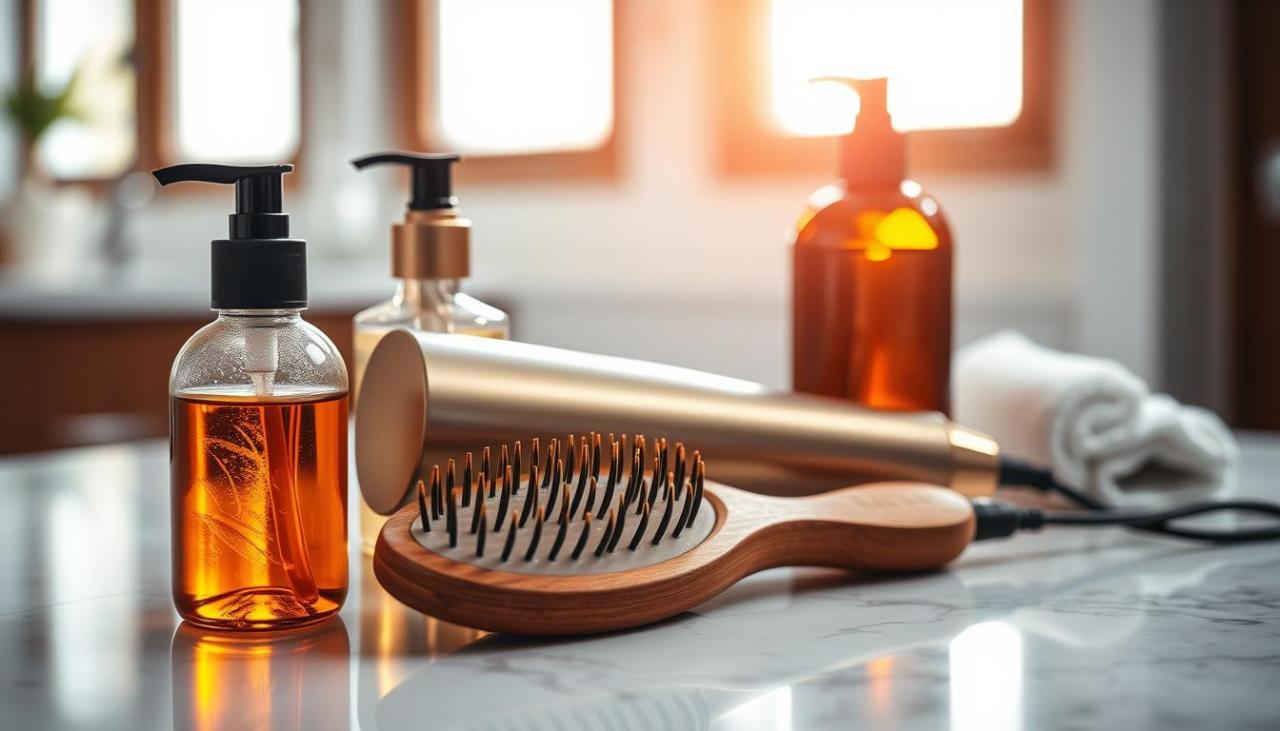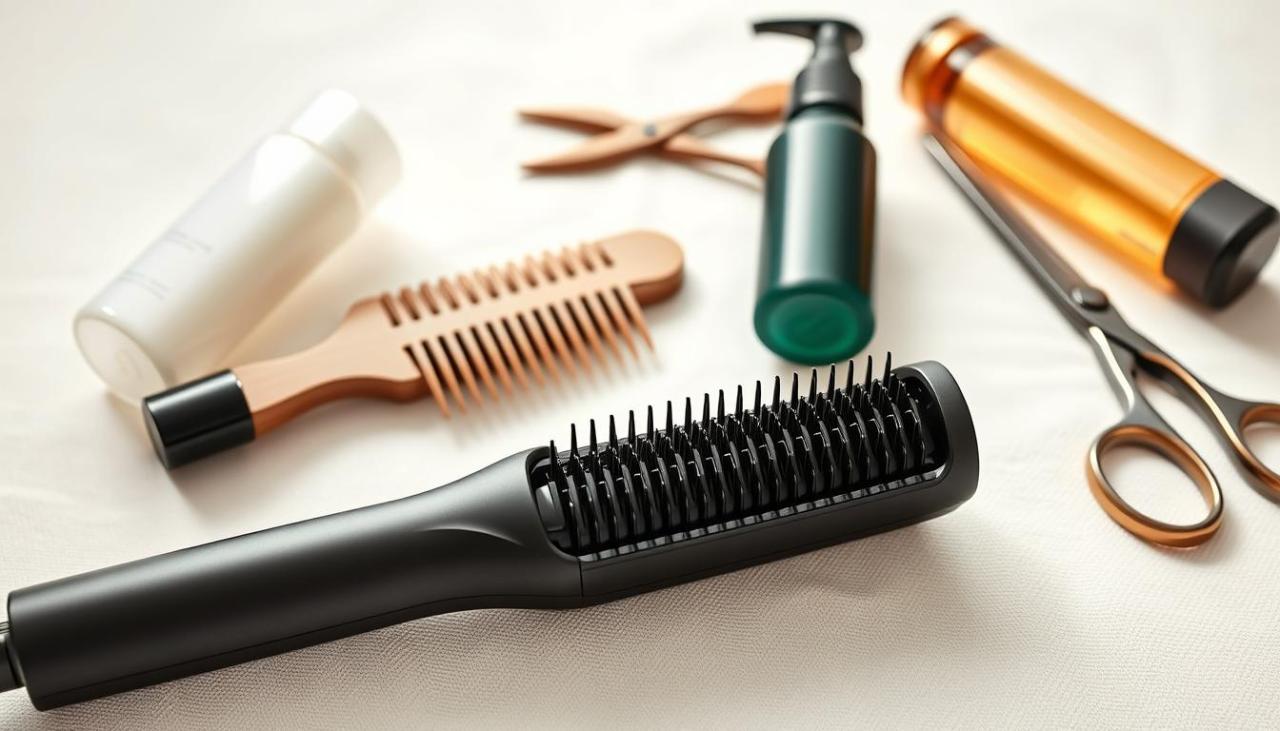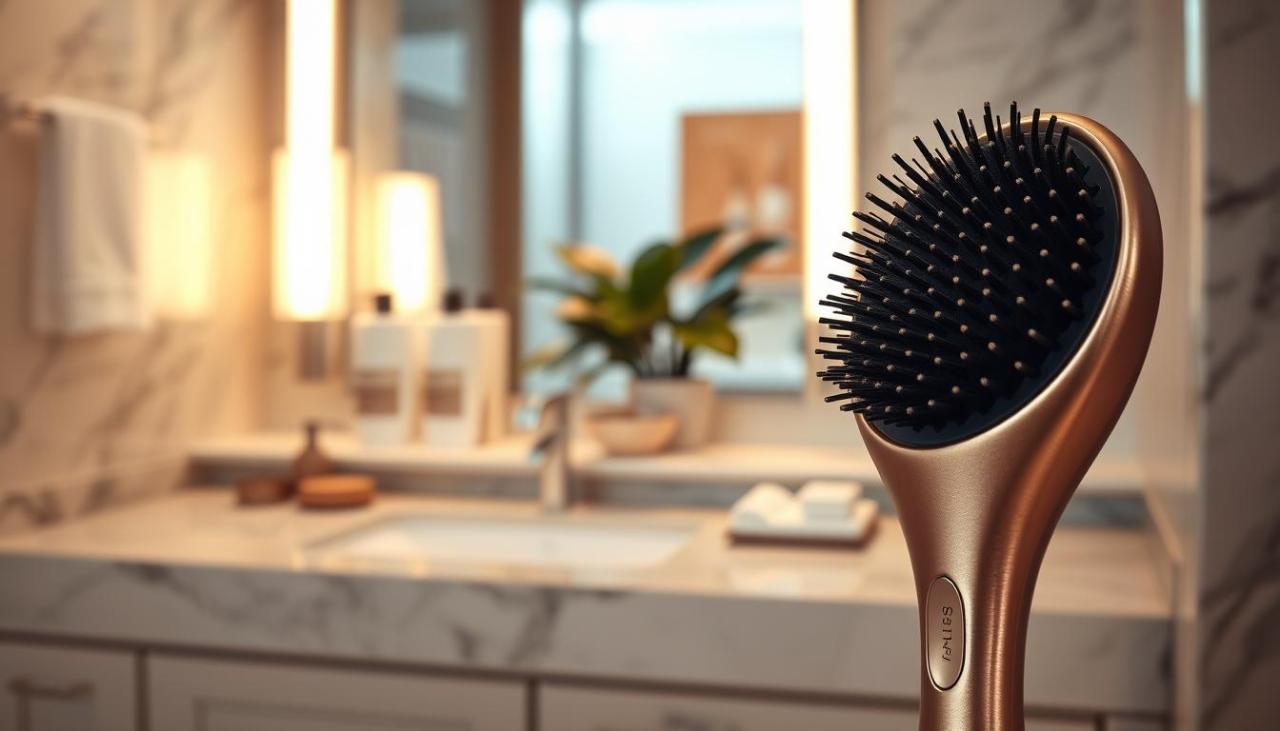
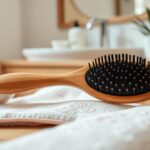
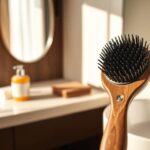
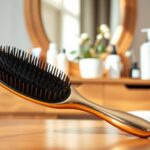
Did you know that the average person loses up to 100 strands of hair daily? This is normal, but using the wrong hair care tool can make it worse. Choosing the right tool is key to keeping your hair healthy and vibrant.
Fine and thin hair needs gentle handling to avoid breakage and static. Our guide will show you how to pick the best hair brush for your hair. We’ll also share tips on how to keep your styling accessory in top shape.
By learning these simple habits, you can turn your hair care routine into a nourishing experience. Let’s start building a healthier base for your hair today.
Key Takeaways
- Identify the ideal materials to prevent static and breakage.
- Learn why thin textures demand specific, soft-bristle designs.
- Discover proper techniques to detangle without causing damage.
- Understand the importance of regular cleaning for hygiene.
- Match your specific needs to the right professional-grade equipment.
Choosing the Right Hair Brush for Your Hair Type
Choosing the right hair brush is key to a great hair day. The right brush can change how you style your hair every day. Knowing your hair type helps you pick the best brush for a healthy, beautiful look.
Understanding Different Hair Textures
Your hair type, thickness, and density matter when picking a brush. Fine hair needs soft bristles to avoid breakage. Thick or coarse hair needs stronger bristles to handle tangles.
Long hair needs bigger brushes for better styling. Short hair does well with smaller, more precise brushes for control.
Essential Features to Look For
When picking a hair brush, focus on function over looks. Different hair brush types offer special benefits for various styling needs:
- Boar Bristles: Great for spreading scalp oils, adding natural shine to your hair.
- Nylon Bristles: Flexible for detangling without harming your hair.
- Paddle Brushes: Best for smoothing long hair and reducing static.
- Round Brushes: Perfect for adding volume, body, and curls during blowouts.
Look for a cushioned base for gentle scalp care. An ergonomic handle is also crucial for comfort and control while styling.
Common Mistakes When Selecting a Brush
Many choose brushes based on looks or color, not need. This can harm your hair over time.
Don’t use stiff bristles on fragile or thin hair to avoid breakage. Also, check if your brush is for wet or dry hair. Wrong brushes on wet hair can damage delicate strands. Picking the right brush for your routine is key for healthy hair.
The Benefits of Using a Quality Hair Brush
Choosing a high-quality hair care tool makes grooming a special part of your day. It’s not just an accessory; it’s a key to your hair’s health. Knowing the hair brush benefits helps us pick the best one for our hair.
Improved Hair Health and Shine
A top-notch brush spreads your scalp’s oils through your hair. This makes your hair naturally shiny. It’s a look that chemical products can’t match.
Also, a good brush boosts blood flow to your scalp. This helps your hair grow stronger. Regular use keeps your hair looking healthy and full of life.
Reducing Breakage and Split Ends
Using the wrong brush can harm your hair. A quality brush has soft bristles that gently work through tangles. This reduces hair breakage.
It also keeps your hair strands strong. A brush with the right bristles and handle helps avoid split ends. Your hair stays smooth and shiny for longer.
Enhancing Your Styling Routine
Learning to style with a hair brush makes mornings easier. A professional brush helps add volume, smooth frizz, or enhance your natural texture. It makes styling faster and more enjoyable.
A well-made brush is comfortable to hold for long styling times. It helps you achieve a salon-quality look every day. The right tool makes it easy to get the look you want.
Daily Hair Care Routine with Your Hair Brush
Your hair brush for everyday beauty is more than just a simple accessory. It’s the foundation of your long-term hair health. A consistent daily routine helps manage your hair well and prevents damage. Always check your hair’s condition before starting to use the right approach.
Brushing Techniques for Healthy Hair
Learning the right hair brush techniques is key to avoiding breakage and keeping hair smooth. Start brushing at the ends, gently working out tangles before moving up to the roots. This way, you avoid tight knots and reduce scalp strain.
Don’t force the brush through tough knots. Instead, use short, controlled strokes to loosen the hair. Gentle handling is crucial for keeping your hair strands intact, even with fragile or tangled hair.
Incorporating Brushes into Your Hair Care Regimen
A good hair care tool does more than just detangle. It can be used in different parts of your grooming routine for better results. Here are some ways to use your brush throughout the day:
- Before styling: Brush to spread natural scalp oils down to the ends for shine.
- After applying products: Gently work through leave-in conditioners or detanglers for even coverage.
- Between wash days: Use a clean brush to smooth the surface and remove debris.
Adjust your brush pressure based on your hair type. Fine or curly hair needs a light touch to avoid thinning or frizz. By being mindful of your movements, your daily routine can be soothing and beneficial for your hair.
Brushing Methods: Wet vs. Dry
Knowing the difference between wet and dry brushing is key to keeping your hair healthy. Your hair is most fragile when it’s wet. So, you need to pick the right hair brush types based on how wet your hair is.
When to Brush Wet Hair
Wet hair is swollen and can easily break. Use a brush made for wet hair, with flexible teeth that don’t pull too hard.
Start brushing from the ends and work your way up. This way, you avoid tangles and protect your hair from damage.
The Best Practices for Dry Brushing
When your hair is dry, you can use different hair brush techniques to style it. A boar bristle or mixed-bristle brush is great for smoothing and spreading scalp oils.
These brushes help reduce frizz and make your hair look polished. They’re a must-have for your hair brush for hair styling routine. But, always check the brush’s instructions before using it.
For example, wooden-pin brushes like the Crown Affair Brush No. 002 are for dry hair only. Using the wrong hair brush types can harm your hair. So, choose the right brush for each step of your hair care.
How to Clean and Maintain Your Hair Brush
Keeping your hair brush clean is key to great hair every day. Over time, your brush picks up hair, styling products, oils, and dust. If not cleaned, these can make your hair look dull or oily.
The Importance of Regular Cleaning
We often forget about our brushes, but they’re crucial for our hair care. Consistent hygiene keeps your scalp healthy and prevents irritation from bacteria. Cleaning your brushes regularly makes them last longer.
“A clean tool is the first step toward achieving professional-grade hair health at home.”
Step-by-Step Cleaning Process
Start by removing hair from the bristles weekly. For a deeper clean, wash plastic or synthetic brushes monthly with mild shampoo. Scrub the bristles, rinse well, and let them air dry with bristles down.
Wooden, natural-bristle, or cushioned brushes need special care. Don’t soak them in water, as it can damage the wood or cause mold. Use a damp cloth with gentle soap to clean the bristles.
Signs That It’s Time to Replace Your Brush
Even with good care, brushes have a limited lifespan. Look for signs like warped cushions, broken bristles, or a strong smell that won’t go away after cleaning.
If your brush hurts your scalp or pulls your hair, it’s time for a new one. Keeping a maintenance schedule helps you know when it’s time for a replacement.
| Maintenance Task | Frequency | Action Required |
|---|---|---|
| Hair Removal | Weekly | Pull out loose strands |
| Deep Cleaning | Monthly | Wash with mild shampoo |
| Inspection | Quarterly | Check for broken bristles |
| Replacement | As Needed | Discard if warped or damaged |
Travel-Friendly Hair Brushes for On-the-Go Beauty
A busy lifestyle means you need a reliable styling accessory that fits in your bag. Whether you’re at the gym, on your way to work, or on a weekend trip, keeping your hair looking great is key. Having the right tools ensures you can keep your style up, no matter where you are.
Compact Designs for Every Bag
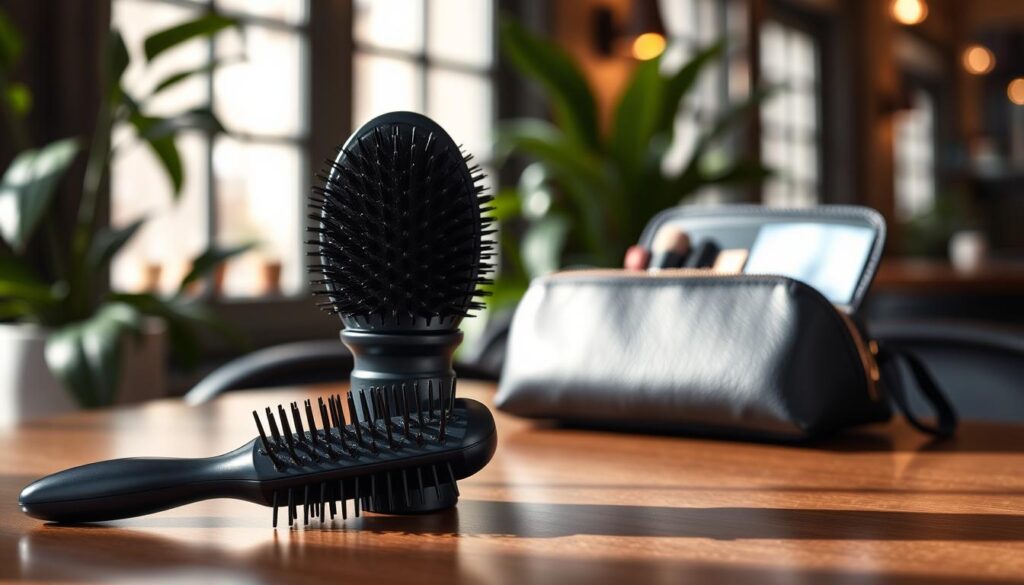
Size is crucial when picking a portable tool. You want a brush that fits easily in your purse or gym bag. For example, the small N.04 from La Bonne Brosse is a great choice for fine hair. It’s small but still works well.
Choosing the best hair brush for travel means finding a balance between size and quality. Don’t compromise on quality for a smaller size. A good travel brush should still detangle and smooth your hair well.
Must-Have Features in Travel Brushes
When picking a hair brush for travel, look at specific features. Brushes with protective covers are great for keeping the bristles clean in your luggage. Also, consider the bristle flexibility for gentle hair handling.
The handle design is important for comfort. Choose ergonomic shapes for a firm grip, even when you’re in a hurry. Make sure the brush works for both wet and dry hair for more uses.
Focus on practical performance, not just looks. A durable styling accessory lasts longer than a flimsy one. By choosing the right hair brush, your hair stays healthy and stylish, wherever you go. The right best hair brush makes beauty easy, even on the move.
Choosing Brushes for Different Hairstyles
Finding the right hair brush types is key to a salon-quality look. Whether you want sleekness, volume, or updos, the right brush is essential. It turns your look around.
Understanding how different bristles and shapes work with your hair is crucial. This way, you can get professional results at home.
Tools for Straightening
For a smooth, straight look, use paddle and vent brushes. They cover a lot of hair, making your blowout faster. The flat paddle brush tightens hair, reducing frizz and flyaways.
Brushes for Curling and Waves
Round brushes are great for adding body and waves. They help shape hair while blow-drying. Choose a barrel size that fits your hair length for the best curls or waves.
- Boar bristles: Great for refining blowouts and adding shine.
- Nylon bristles: Good for thicker hair, offering grip and detangling.
- Mixed bristles: Perfect for versatile styling, balancing smoothness and control.
The Best Brushes for Updos
For polished updos, precision is key, even with extensions or long hair. Use a brush with boar and nylon bristles for smooth gathering without breakage. These hair brush types are gentle yet effective, perfect for tight styles.
The Role of a Hair Brush in Scalp Health
We often focus on our strands, but the foundation of healthy hair starts at the scalp. Using a proper hair care tool is more than just a way to detangle; it is an opportunity to support the skin beneath your hair. When we brush correctly, we create a soothing experience that promotes overall hair wellness.
Benefits of Scalp Stimulation
One of the primary hair brush benefits is the ability to stimulate the scalp gently. This process helps to increase blood flow to the hair follicles, which can create a more favorable environment for growth. It is important to note that this is a form of gentle care rather than a medical treatment for hair loss.
Brushing also helps distribute your natural oils from the roots toward the ends of your hair. This natural conditioning process keeps your hair hydrated and shiny without the need for excess products. Regular, light stimulation can make your scalp feel refreshed and invigorated after a long day.
Techniques for Gentle Brushing
To get the most out of your hair brush techniques, you must prioritize a light touch. We recommend using slow, deliberate passes rather than aggressive strokes. Focus on the roots, but avoid scraping the skin, as this can cause irritation or damage to the delicate surface.
If you experience any pain or redness, stop immediately. We suggest choosing brushes with flexible nylon ballpoint bristles or capped tips, as these are much kinder to sensitive scalps. The following table outlines how different bristle types impact your comfort during daily use.
| Bristle Type | Scalp Feel | Best Use Case |
|---|---|---|
| Ballpoint Nylon | Very Gentle | Daily scalp massage |
| Boar Bristle | Soft/Firm | Oil distribution |
| Metal Pins | Sharp/Hard | Heavy detangling |
| Capped Tips | Comfortable | Sensitive scalps |
Exploring Specialty Brushes for Unique Needs
Dense, curly, or thinning hair needs special care. A standard brush might not be enough. Finding the right hair brush can change your styling game.
Brushes for Thick or Curly Hair
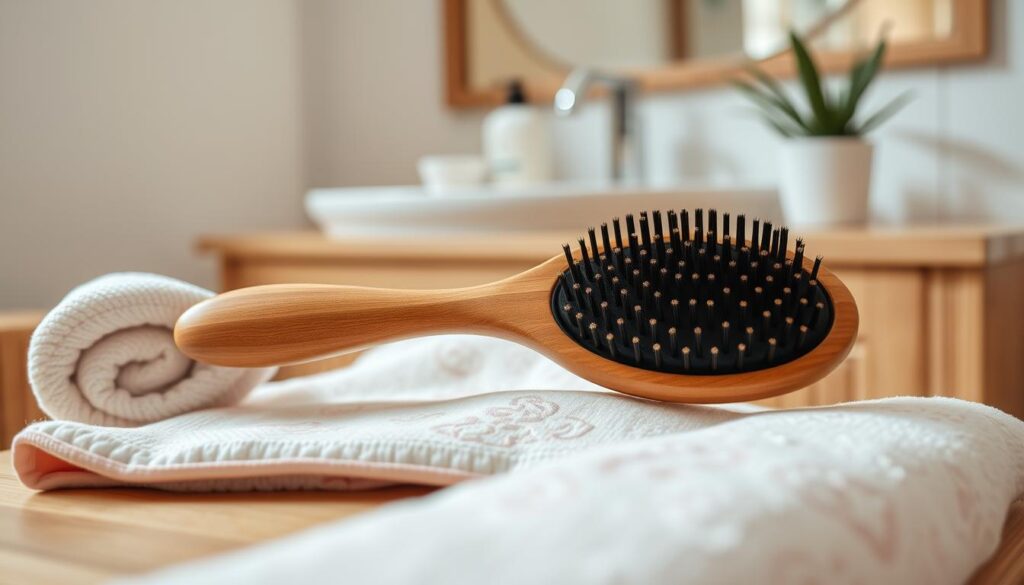
Dealing with thick or curly hair can be tough. The best hair brush for these types has flexible bristles. They help move through hair without causing damage.
Detangling in small sections helps spread oils and prevent breakage. This keeps your hair healthy.
“The secret to healthy hair is not just the product you use, but the gentle care you provide during your daily detangling process.”
For curly hair, look for brushes with wide teeth or cushioned bases. These designs help maintain your hair’s natural shape. The right brush keeps your curls looking great all day.
| Hair Type | Recommended Feature | Primary Benefit |
|---|---|---|
| Thick/Coarse | Stiff, long bristles | Deep penetration |
| Curly/Coily | Wide-spaced teeth | Preserves curl pattern |
| Thinning/Fragile | Soft, flexible tips | Prevents scalp trauma |
Detangling Brushes: When to Use Them
Detangling is key, but it’s best when hair is wet. This is when hair is most prone to breakage. Use a leave-in conditioner or detangling spray for easier brushing.
For detangling, look for brushes with ergonomic handles and soft bristles. If you detangle dry, use a light oil or serum first. Choosing the right hair brush types keeps your hair healthy and easy to manage.
Eco-Friendly Hair Brush Options
We think your daily grooming should help the planet. Switching to green beauty tools is a simple way to do this. By picking products that care for the earth, you support responsible consumption.
Sustainable Materials to Look For
When you’re looking for a new tool, don’t just look at the surface. Look for cellulose acetate, made from recycled wood pulp. It’s durable and breaks down easily. Handles might be made from eco-friendly beechwood or natural resins.
Before you buy, think about the whole product. Check where the bristles come from, the cushion’s material, and the handle’s make. Choosing vegan and cruelty-free parts keeps your beauty routine kind.
Brands Leading the Way in Green Beauty
Some companies are leading the way in eco-friendly products. Credo’s Perfect Daily Hair Brush is a top pick for a vegan and cruelty-free brush. It comes in sustainable packaging and has different bristles for all hair types.
After you buy, taking care of your brush is key to being green. Clean it often and store it right to make it last longer. This way, you avoid throwing it away and reduce waste.
The Impact of a Hair Brush on Your Look
Getting a salon-quality look at home starts with the right hair brush for everyday beauty. We often don’t realize how much our hair tools affect our hair’s shape, shine, and health. By knowing how different brushes work with our hair, we can turn our daily hair care into a professional styling session.
Creating Volume and Body
For a fuller look, the right tools are key. Vented brushes are great for lifting roots when blow-drying. They let air reach the scalp, drying fast and lifting hair instantly. This is perfect for fine or flat hair.
Round brushes help us achieve defined hair. By wrapping hair around the barrel, we get soft waves or smooth, voluminous curves. The hair brush benefits are clear: we control our hair’s direction and bounce, getting a polished look that lasts.
The right brush is not just a tool; it’s the foundation of every great hairstyle. Choosing the right shape and material unlocks your hair’s true potential.
Enhancing Natural Texture
Managing texture needs a gentle touch and the right technique. For waves or curls, paddle brushes are best for controlled passes that keep the natural shape. Avoiding aggressive brushing helps prevent frizz and keeps definition.
When styling with hair brush tools, consistency is crucial for a sleek look. Paddle brushes are great for polishing large sections, while smaller brushes smooth out flyaways near the hairline. The right brush makes our hair look healthy and intentional, whether we’re styling a sleek ponytail or just smoothing our hair.
| Brush Type | Primary Use | Styling Impact |
|---|---|---|
| Vented Brush | Blow-drying | Adds root lift and volume |
| Round Brush | Shaping | Creates curls and movement |
| Paddle Brush | Smoothing | Polishes and reduces frizz |
Hair Brush Myths Debunked
We often hear that brushing hair a lot makes it healthier. But, the truth is more complex. The idea that a certain number of strokes makes hair perfect is a myth of a myth. Your hair’s health really depends on its type, the quality of your brush, and how hard you brush.
Addressing Common Misconceptions
Expensive brushes might feel good and last long, but they don’t always work better. A simple Conair paddle brush can be just as good as an expensive one if it fits your hair. Look at the bristles’ softness and density, not the brand or price.
Setting the Record Straight on Hair Damage
Styling hair gently is key to avoid breakage. Keeping your brushes clean is important to prevent dirt and buildup. Clean your brushes every month to keep them working well and safe for your scalp.
Find a hair care routine that works for you. Whether you like natural bristles or synthetic pads, aim for less pulling and more shine. With the right tool and care, you can have beautiful, healthy hair every day.